
Key Takeaways
- Safe falling drills teach children how to recover calmly and continue trying skills.
- Repeated movement tasks strengthen coordination, focus, and body control awareness.
- Group routines encourage patience, observation skills, and positive peer interaction.
- Early gymnastics practice builds confidence that carries into play and daily activities.
Introduction
When a child attempts a new gymnastics move and briefly loses balance before standing up to try again, the moment reveals how resilience begins to form during playful challenges. Experiences like this highlight how resilience grows when children feel safe exploring movement challenges. Guided drills in children’s gym classes turn unexpected tumbles into opportunities to understand body movement and decision-making.
As children continue exploring structured movement activities, early training begins shaping how they react emotionally to mistakes and unexpected slips. Structured toddler sessions in gymnastics for toddlers in Singapore introduce balance, rolling, and landing in ways that feel playful yet purposeful. Exposure to these controlled challenges helps children grow familiar with trial and error while keeping lessons enjoyable.
Understanding How to Fall Safely
Turning Tumbles into Technique
When children experience unexpected loss of balance during physical activity, the sensation can feel intimidating without proper guidance. Instructors break down how to bend knees, tuck chins, and protect wrists during structured gymnastics lessons. Demonstrations and repetition help children react with better body control when balance shifts unexpectedly.
As children repeat landing drills under supervision, the exercises gradually build stronger body awareness and coordination. Children learn where to place hands, how to distribute weight, and how to roll out of awkward positions. Skills learned during training carry into playground time, sports sessions, and even daily routines.
Starting Early with Simple Drills
As toddlers begin exploring physical movement, curiosity naturally draws them toward activities that keep them close to the ground. Soft mats and low platforms used in gymnastics for toddlers in Singapore give them room to practise controlled falls. Crawling off padded blocks or rolling from gentle slopes teaches how to manage momentum.
By repeating these drills in a consistent and playful setting, toddlers gradually develop familiarity with falling and recovering safely. Instead of freezing after a tumble, children learn to assess and stand up again. Confidence grows from understanding what just happened and knowing how to respond.
Building Mental Strength Through Repetition
Trying Again After a Miss
While learning new gymnastics movements, children frequently experience missed jumps and wobbly handstands as part of their progress. Repetition forms the core of progress in children’s gym classes. Attempting a skill, adjusting technique, and giving it another go teaches persistence without heavy pressure.
Throughout guided sessions, encouragement from instructors focuses on improving effort and refining body positioning. Children begin to see improvement as a gradual climb, not a single leap. A resilient mindset shapes how children respond to challenges in school and group activities.
Gentle Challenges for Young Learners
Because younger children naturally shift focus quickly, playful tasks help maintain engagement during physical learning. Mini obstacle paths and simple beam walks used in gymnastics for toddlers in Singapore keep challenges manageable for young learners. Completing one section at a time shows toddlers that progress happens step by step.
When instructors highlight small achievements during training, children develop stronger motivation to keep practising. A successful roll or balanced step becomes proof that practice brings results. Consistent progress lays the groundwork for steady emotional growth without dramatic swings.
Learning Patience and Peer Encouragement
Waiting, Watching, and Learning
During structured activity rotations, taking turns can quietly test any child’s patience while building social awareness. Station rotations in children’s gym classes move children through activity points where waiting becomes part of the routine without feeling idle. Observing peers attempt a skill also creates learning moments.
When children observe peers falling and rising again during training, the experience gradually normalises mistakes. Children realise that everyone faces wobbles. Shared experiences reduce embarrassment and encourage empathy.
Growing Together in Group Settings
Within structured sessions, group activities introduce simple partner drills and circle routines that help young participants interact comfortably. Holding hands during balance games or cheering for a friend builds early social confidence.
As classmates offer smiles and claps during group sessions, positive reactions naturally reinforce effort. Peer encouragement can motivate children to attempt movements they might otherwise avoid. Confidence develops not from perfection, but from participation.
Physical Skills That Reinforce Resilience
Strength that Supports Stability
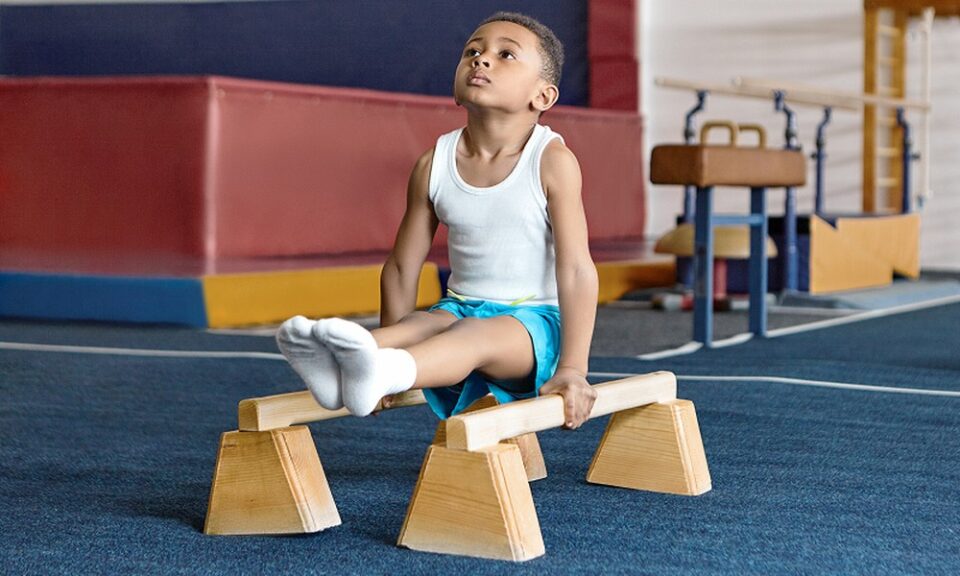
As children build muscle coordination through regular training, stronger muscles help them recover more quickly from slips. Core drills, hanging exercises, and crawling races build coordination and body awareness during children’s gym classes. Improved strength makes controlled landings easier and safer.
During focused balance exercises using boards and low beams, children practise controlling posture and foot placement. Concentrating on posture and foot placement trains both mind and body to respond calmly when movement shifts.
Flexibility and Flow in Early Years
Throughout early gymnastics sessions, stretching and rolling sequences help children maintain adaptable and responsive body movement. Flexible joints and responsive muscles reduce stiffness during awkward movements. Practising smooth transitions between poses also improves rhythm and timing.
When children practise fluid movement transitions, they gradually learn to stay relaxed during unexpected mistakes. Instead of locking up after a stumble, they learn to move with the motion and recover with composure.
Conclusion
Through structured gymnastics training, children learn how to respond calmly when movement does not go as planned. Practising safe falling techniques, repeating skills patiently, and engaging in group routines all contribute to building resilience through action. Movement sessions combine physical training with confidence-building experiences that stay relevant in daily play, learning environments, and social settings. Parents seeking programmes like children’s gym classes can explore training environments designed for young learners.
Contact BearyFun Gym now to discover classes that help children practise resilience, coordination, and playful movement in a safe setting.
