
You trained as a nurse back home. You have years of clinical experience. And now you’re in Canada, wondering why the licensing process feels like starting from scratch.
The honest answer: it is complicated — but it’s not impossible, and it doesn’t have to cost a fortune. There are affordable nursing pathways for immigrants in Canada, from bridging programs to competency assessments, that help internationally educated nurses get back to practice without burning through their savings.
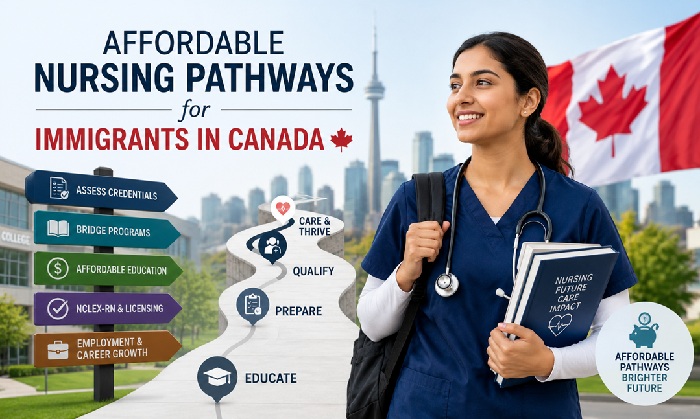
How the Nursing Licensing Process Works for Immigrants in Canada
Nursing in Canada is regulated provincially. That means the rules in Ontario differ from BC, Alberta, or Manitoba. But most provinces require you to go through a national body first.
Step 1: NNAS Assessment
The National Nursing Assessment Service (NNAS) reviews your international credentials and creates a report for the provincial regulatory body. The fee is around $650 CAD — one of the bigger upfront costs you’ll face.
Step 2: Provincial Registration
Based on your NNAS report, the provincial college (like CNO in Ontario or BCCNM in BC) determines whether you can challenge the NCLEX-RN directly or whether you need additional training.
Step 3: NCLEX-RN Exam
Canada switched from the CRNE to the NCLEX-RN in 2015. The exam fee is around $360 USD. Many test prep resources are free or low-cost online.
Affordable Nursing Bridging Programs for Immigrants
Funded Programs in Ontario
Ontario has some of the strongest support for internationally educated nurses. The Internationally Educated Nurses Integration (IENI) project offers funded bridging programs through colleges like Humber, George Brown, and Centennial. These programs cost little to nothing for eligible participants.
BC Options
In BC, CRNBC partnered with several institutions to offer bridging support. The IEN Integration Initiative provides funded mentorship and clinical placement support for nurses who need hours to meet registration requirements.
Prairie Provinces
Manitoba and Saskatchewan have strong demand for nurses and more flexible bridging options. Saskatchewan Polytechnic and Red River College both offer affordable upgrade programs specifically designed for internationally educated nurses.
True Costs Breakdown
| Cost Item | Estimated Cost (CAD) |
| NNAS Assessment | ~$650 |
| NCLEX-RN Exam | ~$470 (USD converted) |
| Bridging Program (funded) | $0 – $2,000 |
| Provincial Registration Fee | $200 – $400 |
Pro Tips for Immigrant Nurses in Canada
- Apply to funded bridging programs first — seats fill fast and deadlines are strict
- Join IEN Facebook groups and Reddit communities (r/ImmigrationCanada) for real peer advice
- Check if your home country has a mutual recognition agreement with Canada — Philippines, UK, and Australia have streamlined processes
- Some hospitals hire RNs under provisional licenses while you complete requirements — ask HR directly
- Free NCLEX prep: UWorld, Archer Review, and YouTube channels like Simple Nursing are genuinely useful
Common Mistakes to Avoid
Paying for Unaccredited Bridging Programs
There are private companies charging $5,000+ for bridging programs that don’t even count toward your registration. Always verify any program directly with your provincial nursing college before paying anything.
Choosing the Wrong Province First
Ontario has the most IEN support programs but also the most applicants and longest waitlists. Smaller provinces like Saskatchewan or New Brunswick are actively recruiting internationally educated nurses and may get you licensed faster.
Not Tracking Document Expiry
Many nursing credentials need to be translated, notarized, and submitted within certain date windows. Missing these deadlines restarts the clock and costs money.
FAQ: Nursing for Immigrants in Canada
How long does it take for an immigrant nurse to get licensed in Canada?
On average, 12 to 24 months from starting your NNAS application — though this varies significantly by province and how much bridging you need.
Can I work as a nurse while going through the licensing process?
In some provinces, yes. Many hospitals hire internationally educated nurses as Personal Support Workers (PSWs) or nursing attendants during the transition period.
Which province is easiest for internationally educated nurses?
Saskatchewan and New Brunswick are known for being more streamlined for IENs due to high demand. Manitoba also has faster processing times compared to Ontario.
Are there scholarships for immigrant nurses in Canada?
Yes. The Canadian Nurses Foundation and some provincial health authorities offer bursaries specifically for internationally educated nurses. Check with your provincial nursing association for current opportunities.
The path isn’t quick, but it is manageable. Focus on getting your NNAS report started, find out exactly what your provincial college requires, and connect with other IENs who’ve been through it. The community is genuinely supportive, and thousands of nurses have made this transition successfully.
