
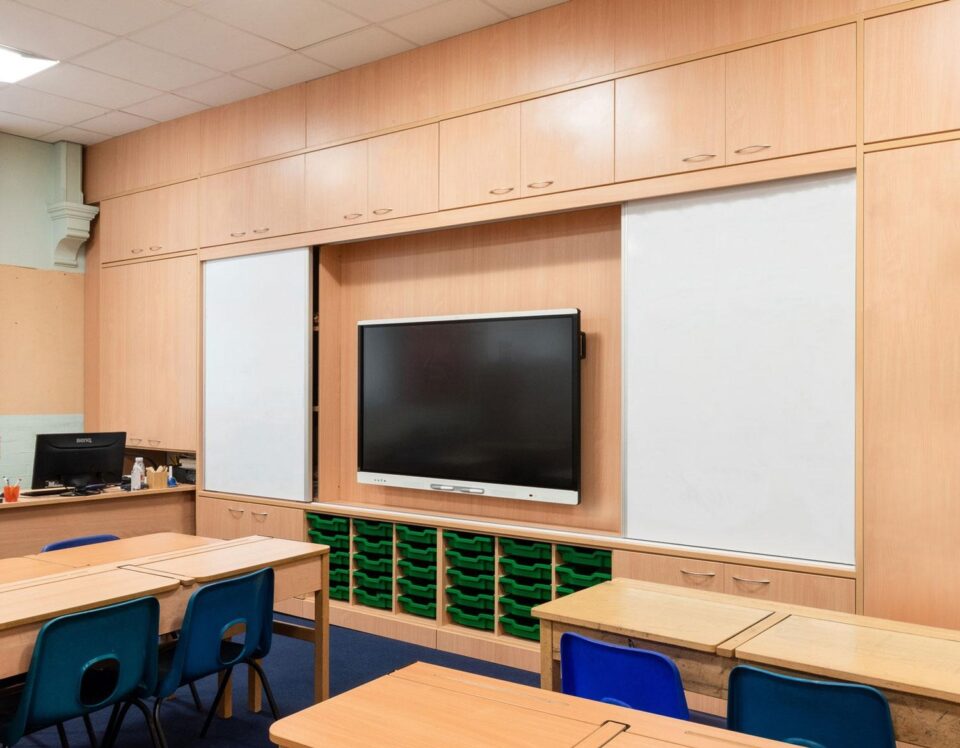
A teaching wall, or as others call it learning or media wall, represents a teaching unit or fixed storage installed at the front of the classroom. Everything is created around a central screen as well as interactive whiteboard, while it features other things included such as combination of open shelving, cupboards, sliding panels and tray units.
Nowadays, numerous schools have decided to implement and install them, which make them appealing for different parts including food technology rooms, IT suites and science labs, among other places. Teaching or classroom walls are becoming a standard in how modern learning spaces should be used and designed.
Therefore, in further article, we will present you a perspective on what makes them worthwhile addition to a classroom. Let us start from the beginning.
Better Storage Solution
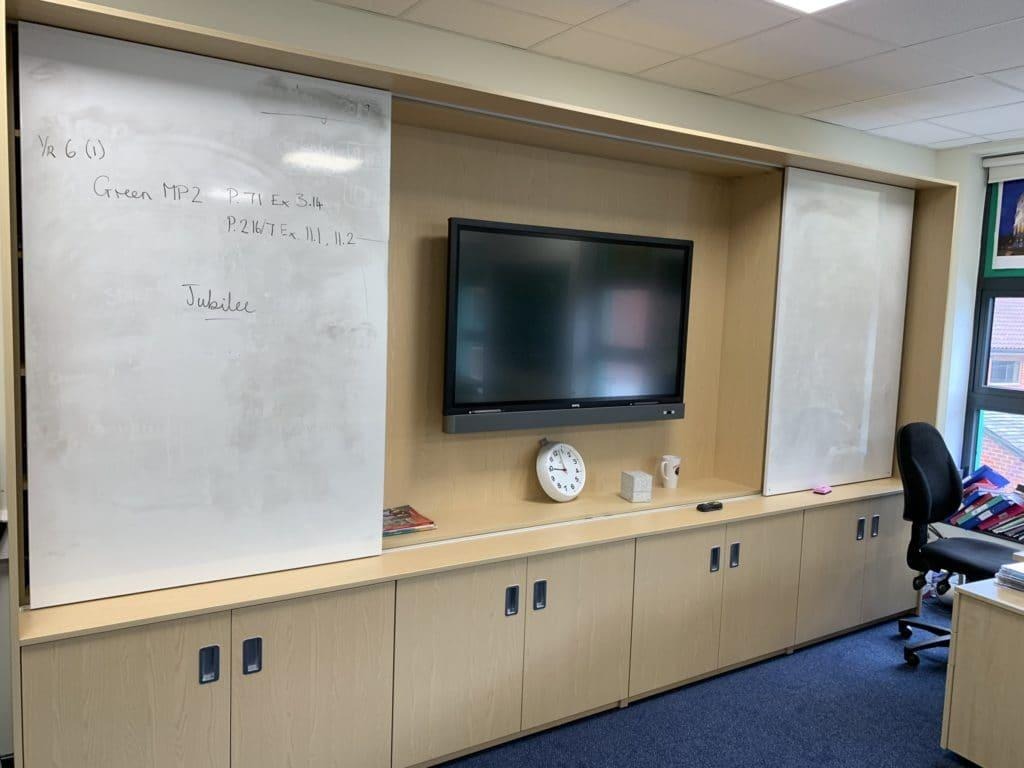
In most classrooms, storage ends up wherever you can find the space to put your things. Tray may end up in the corners, while cupboard may sit at the back, while bookshelves line with the walls. Although this particular process work to an extent, it takes up more room than necessary, which is vital to remember.
As soon as you need to fit in chairs, desks and space for thirty children to move around comfortably, you will end up with lack of space for other activities. When you add a teaching wall, you will combine and bring together all storage in a single place along the wall.
That way, you can save up to thirty percent of your classroom floor space, while ensuring the additional freedom in how the room is laid out and used. It also makes every day routines simpler to manage.
If you wish to store everything within the reach, you can find exactly what you need without worrying about space between tables.
Less Distraction
Another important consideration is that classrooms are always full of things that are continually competing for student’s attention. For instance, when you have a half-open cupboard filled with supplies or stack of worksheets from past lesson, these items can pull their focus away from their work.
Since we live in the world where focus is at its minimum, a small distraction can cause serious problems in the classroom. That is why you should implement ways and methods to keep children active and interested in the process. You should click here to learn more about classrooms.
When you add a teaching wall, you can keep these items hidden behind the closed doors or siding panels until you finish with them. Combining fewer things to look around the edges will ensure everyone can concentrate on things that happen at the front, which is vital to remember.
Central Focus
Teaching walls offer the classroom with a clear sense of structure. When you have a screen, whiteboard and teaching aids in a single space, which is the front of the room, you will create a natural point of focus. Children and students do not need to guess where to look.
That way, they are more likely to follow a lesson instead of moving their heads and thinking about things that are happening in other parts of the room. Everyone will be concentrated in the middle, which will represent the same view and similar chance to engage.
At the same time, teaching wall is effective addition to your classroom because you will get a sense of consistency. When the layout is the same from one place to the next, student will teach where to look, how the space works for them and everything they should expect throughout the process.
The small change can make a significant difference to behavior and engagement across the school day, which is why you should maintain consistency through different classrooms with proper teaching wall.
Revolves Around Teacher
Each classroom is specific, which is vital to remember. Some may have awkward beams, corners, radiators to work around or sloping ceilings. Others may require implementing specific teaching styles, subject requirements and age groups. Things that work well in a Year 1 classroom may not be effective and practical in an IT suite or science lab.
Therefore, you can customize and pre-plan teaching walls around how you will use the space, instead of forcing the room to adapt based on the furniture you wish to implement. You can place whiteboards at height, which is suitable for younger people and children.
Cupboards can be included or left out, which depends on how much storage you need for the process. Finally, you can leave a particular space for displays, bins and hooks, which is vital to remember.
If you are teaching in a subject specific classroom, you can adjust the layout based on the characteristics. Therefore, features of classroom walls may include lockable cupboards from equipment, while you may need to add data points and power.
The customizable design and flexibility means that teaching walls should become the part of a classroom, which will in-turn shape the way learning and teaching happens inside. Check out this guide: https://www.wikihow.life/Decorate-a-Classroom to learn how to decorate a classroom.
Final Word
As you can see from everything mentioned above, implementing classroom wall can help you improve the overall focus and ensure the better efficiency and productivity of your students.
However, everything depends on the topic and classroom type, which is why you should choose the one that, will meet your needs and preferences.
Generally, whatever you choose, we recommend you to search online and talk with people who know a few things about the topic, which will help you throughout the process.
