
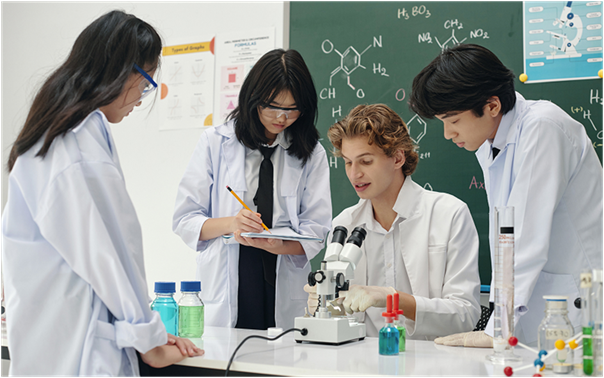
For students in Singapore navigating the rigorous science curriculum, deciding between chemistry and physics tuition often boils down to their academic needs and future aspirations. As both subjects form core pillars of the science stream, their complexities differ significantly—choosing supplementary education is an important one. When it comes to chemistry tuition in Singapore, the focus is not only on formulae and reactions but also on analytical thinking, while physics tuition leans more on logic, mathematical application, and conceptual understanding.
Understanding the Core Focus of Each Subject
While chemistry and physics are both grounded in scientific investigation, they vary greatly in their structure and cognitive demands. Chemistry explores matter, its properties, and how substances interact and change. Students need to understand trends in the periodic table, chemical bonding, stoichiometry, and organic reactions.
On the other hand, physics deals with the fundamental principles governing energy, motion, forces, electricity, and magnetism. It is far more quantitative and often requires a solid mathematical foundation. Tuition in physics usually involves solving equations and applying formulas to theoretical and real-world scenarios, whereas chemistry involves memorisation of reactions and understanding processes at a molecular level.
Key Differences in the Tuition Approach
The approach taken by tuition centres for chemistry and physics tends to differ due to the unique nature of each subject. For chemistry tuition, lessons often involve concept mapping, memorisation aids, and experiment-based discussions to help students visualise chemical changes and grasp abstract concepts. Tutors might use models to illustrate molecular structures or break down complex equations into manageable steps.
Physics tuition typically focuses more on diagrammatic representations, step-by-step problem-solving strategies, and real-life applications of concepts. Tutors often place greater emphasis on practice questions and ensuring students are confident with mathematical manipulations. The objective is not just to understand a phenomenon but to quantify and analyse it.
Specialisation at the Junior College Level
When students reach the JC level, the difficulty and depth of content increase considerably. JC chem tuition is known to be highly focused and structured, often catering to the Integrated Programme (IP) or H2 syllabus. Students are expected to apply their understanding of chemical principles in unfamiliar contexts, making exam techniques and data-based question practice essential.
Physics at the JC level also becomes more theoretical and mathematical. Students are expected to demonstrate a deeper understanding of abstract concepts such as quantum physics, kinematics, and electromagnetism. Tuition for physics at this level generally revolves around honing analytical thinking and stepwise problem-solving skills, especially under timed conditions.
Teaching Methods and Student Needs
Chemistry tuition often caters to students who benefit from visual learning. Reaction mechanisms, colour changes, and laboratory experiments are commonly used to enhance retention. Students who find chemistry abstract may need a curriculum that focuses on linking theory to real-world applications, such as pharmacology or environmental science.
Meanwhile, physics tuition is typically more suitable for students who are comfortable with logic and mathematics. Those who enjoy applying formulas to derive answers and understand principles of engineering or computing are likely to thrive under physics-based tuition sessions. The teaching style often suits analytical learners who prefer a systematic approach to problem-solving.
Customisation and Tutor Expertise
Both chemistry and physics require highly experienced tutors who can simplify complex concepts and tailor their lessons to suit different learning speeds. Centres specialising in chemistry tuition in Singapore often offer diagnostic tests and targeted worksheets that address specific topics like electrochemistry or chemical equilibrium.
Physics tutors, by contrast, usually provide concept-focused tutorials followed by extensive problem-solving drills. These drills are particularly helpful in building confidence before major examinations like the GCE A-Levels or IB assessments. In both cases, small group sizes or one-on-one tuition sessions can significantly impact learning outcomes.
Which One Should You Choose?
Ultimately, the decision between chemistry and physics tuition depends on a student’s learning style, interest, and career goals. Those aiming for careers in medicine, life sciences, or environmental studies may benefit more from JC chem tuition. Conversely, students planning to pursue engineering, information technology, or physical sciences may find greater value in physics tuition.
For students who are struggling with either subject, seeking help early is key. Tuition provides not just content reinforcement but also boosts confidence and exam readiness. Whether it’s through additional resources, customised lesson plans, or one-on-one mentoring, both streams of science tuition serve a crucial role in helping students succeed in Singapore’s competitive academic environment.
Conclusion
Both chemistry and physics tuition offer unique benefits, tailored to the specific challenges of each subject. Choosing the right tuition service means understanding the nature of the subject, the student’s learning style, and academic aspirations. Whether it’s through structured JC chem tuition or rigorous physics problem-solving sessions, targeted support can make a real difference in a student’s academic journey.
To find the most suitable tuition programme, contact Mr Khemistry today and explore options that match your needs and goals.
