
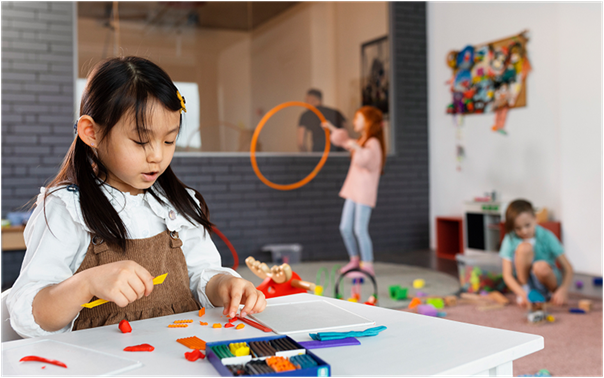
In Singapore, early education is no longer just about preparing children to read or count. It is about building confidence, independence and a sense of belonging from the start. The path from pre-nursery to Nursery 2 is designed to support a child’s growth in stages, allowing room for curiosity while introducing gentle structure.
Many parents recall the first drop-off at a pre nursery school in Singapore with a mix of pride and nervousness. That moment sets the tone for a child’s journey into social spaces. Today’s preschool environment focuses on developing emotional security, physical coordination and early communication, long before any academic pressure begins.
1. Pre-nursery introduces structure in a nurturing way
At the pre-nursery stage, the day revolves around comfort and rhythm. Children are just beginning to spend time away from family, and the learning environment respects that. Teachers create calm, predictable routines that help toddlers feel safe and oriented.
Sensory play, movement, and music often take centre stage. Rather than chasing learning targets, the focus is on encouraging exploration. Parents often notice how quickly their child begins to adjust to group settings, learning small habits like putting toys away or sitting with others during storytime.
2. Early language skills develop through exposure, not pressure
Across pre-nursery and Nursery 1 in Singapore, children absorb language through rich interactions. Teachers speak clearly and patiently, using songs, stories and questions to help young learners grasp tone and meaning.
Rather than rushing into phonics drills, these early years allow children to play with sound and expression. The ability to describe how they feel or ask a simple question becomes the foundation for later literacy. It is not uncommon for parents to see their child suddenly start singing a school song or repeating a phrase learned in class.
3. Social play becomes more intentional in Nursery 1
Nursery 1 sees a shift in social development. Children begin to form preferences, take turns and understand group expectations. Teachers often frame activities around themes such as animals, seasons or community helpers to give shape to lessons and conversations.
Circle time, group art and shared snack routines help children practise cooperation. The ability to wait, share and participate becomes as important as learning colours or numbers. For many families, this is when school starts to feel like a second home.
4. Routines support growing independence
In every level, from pre nursery school in Singapore through Nursery 2, routines are more than a schedule. They are learning moments. Encouraging a child to carry their own water bottle, wipe their hands or pack away materials builds pride in doing things for themselves.
By Nursery 2, children often understand and follow multi-step instructions. Tasks like putting on shoes or clearing their plates become second nature. These small actions support self-reliance and prepare them for the increased expectations of primary school.
5. Literacy and numeracy emerge through play
In the Nursery 2 curriculum in Singapore, children work with letters and numbers more intentionally. Still, the approach remains playful. They may trace letters in sand or count blocks during building activities.
The goal is to help children recognise patterns, sounds and quantities in real-life situations. This makes learning feel meaningful. Many parents are surprised at how naturally their child begins to understand shapes, words and early math without formal worksheets.
6. Fine motor skills support classroom readiness
Whether it’s painting with a brush or peeling a sticker, fine motor activities play a large role throughout early education. These tasks help children control hand movements and build coordination.
By the time they reach Nursery 2, many children are ready to handle pencils and scissors with more confidence. Strengthening these skills gradually ensures they are physically prepared for writing and independent work in later years.
7. Themes keep learning connected and engaging
Teachers across Nursery 1 in Singapore and Nursery 2 often build lessons around familiar themes. A topic like “My Neighbourhood” might include songs, storytelling, art projects and role-play, allowing children to explore the same idea in multiple ways.
This method encourages deeper understanding. It also helps children see how different subjects connect. Families often hear about these themes at home, as children begin to share their observations in daily life.
8. Teacher-child relationships shape emotional security
At every stage, one of the most important factors in a child’s development is the bond they form with educators. Children who feel known and valued tend to engage more fully in class.
Teachers work closely with families, sharing updates and observations. This partnership supports the child’s overall wellbeing. A familiar, kind face at drop-off makes the day smoother for both parent and child.
Conclusion
The journey from pre nursery school in Singapore to the more structured Nursery 2 curriculum in Singapore reflects an evolving approach to early childhood education. It balances play and learning, routine and freedom, group work and personal growth. For parents seeking a well-rounded start to their child’s learning journey, this path offers more than just readiness for primary school—it offers confidence and joy in discovering the world. To explore suitable programmes for your child, contact Brighton Montessori.
