
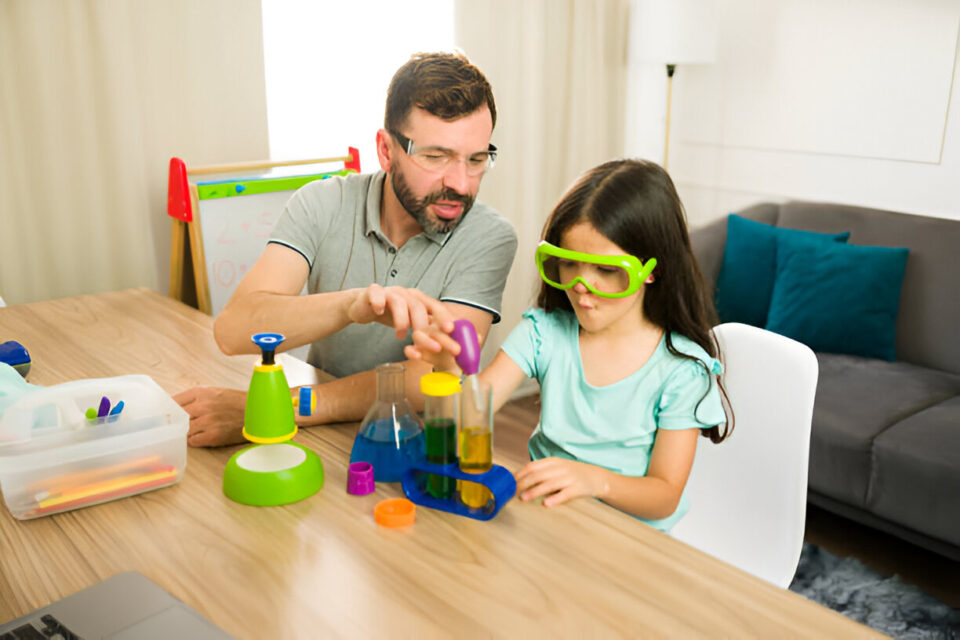
It may seem that chemistry is a hard thing to deal with, yet it does not have to be. A bit of imagination can make your home a mini-laboratory where education can be fun.
Chemistry magic makes reactions, experiments, and chemistry exciting. There are books such as the Magical Elements of the Periodic Table series that just make incredibly difficult science fun to learn and do stuff with. Does your child find chemistry difficult in school, or just loves experimenting? Then, here are some simple and fun ways to make learning chemistry exciting at home.
Start with Simple Experiments
He/she is attracted by nothing as easily as a fizzing, bubbling, color-changing reaction.
No fancy lab required, just household items:
- Baking Soda & Vinegar Volcano: An all-time classic.
- Homemade Slime: Offers a hands-on introduction to the basics of polymers.
- Invisible Ink: Obtains hidden messages with the use of lemon juice.
- Mentos & Soda Explosion: Make it count mostly outdoors.
These activities make abstract ideas tangible and bring curiosity.
Turn Screen Time into Learning Time
Kids love videos, so why not use them for education? Engaging science programs abound that make chemistry exciting.
- BBC’s Chemistry: A Volatile History – Interesting look into the periodic table.
- Bill Nye the Science Guy – Complicated ideas with humor.
- YouTube science channels – Provide fast visual experiments.
These can be viewed with very good conversations and involving experiments at home.
Invest in a Chemistry Set
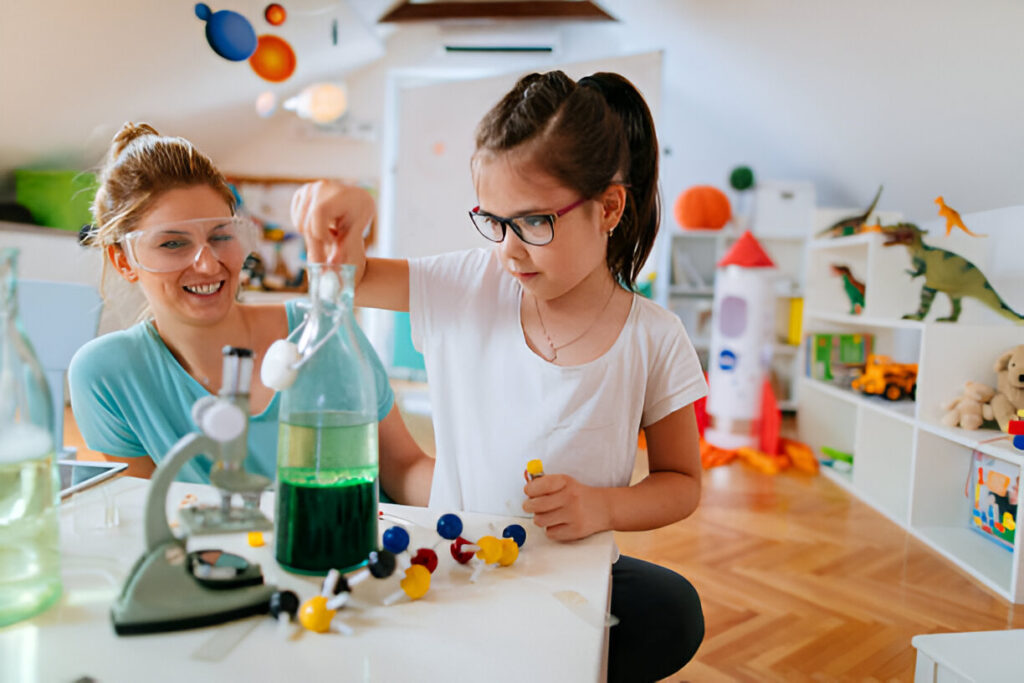
A chemistry set is a passport to infinite exploration. Identify the right age kits with safe, supervised experiments.
- Easier sets are used by younger children; they focus on simple reactions.
- Advanced kits for teens include molecular modeling and real chemical reactions.
- Low-cost DIY kits with readily available materials.
Close supervision is essential, particularly in the case of young children, though the practical experience gained cannot be underestimated.
Bring Chemistry into Everyday Activities
Chemistry is not merely a laboratory subject; it is everywhere. Encourage children to make sense of science in everyday life.
- Baking – Discuss how heat transforms food (a tasty lesson!).
- Cleaning – Present the example of how soap can be used to dissolve oils (chemistry in action).
- Gardening – Write about the nutrients of plants and the soil pH.
Once kids understand that there is chemistry everywhere, they will themselves ask questions.
Visit Science Museums or Virtual Labs
Visit a science museum (if you can) with hands-on demonstrations that make chemistry exciting.
Many museums also offer:
- Live demonstrations (like liquid nitrogen shows).
- Hands-on labs to allow children to mix safe chemicals.
- Remote learning tours.
- Observing real-life solutions strengthens classroom learning.
Final Thoughts
You do not need a chemistry degree to teach the subject at home; only a passion and willingness are sufficient. As you make learning interesting, relatable, and interactive, you will help your child build a real interest in the science field.
To learn more, visit experiment kits and visual guides on Amazon. It can be a first chemistry set, or a picture book on science, your kitchen is the coolest chemistry classroom of all.
Who knows? You might just inspire the next great chemist!
